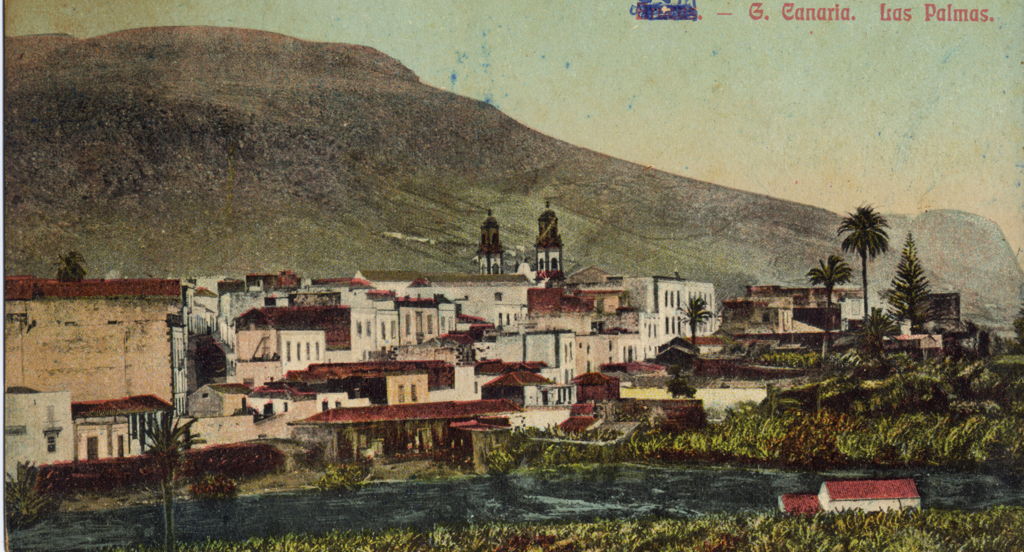

Origin
The history of Santa María de Guía can be said to begin immediately after the conquest, when in 1483, after the distribution of land, Don Sancho de Vargas y Machuca was given some land located in the Vega de Agáldar: the Loma de Caraballo, situated between the ravines known today as the Garzas and Guía ravines.
Although numerous important archaeological sites indicate that these territories were prized by our aborigines in pre-Hispanic times, it was not until 1509, the year in which the construction of the Chapel in honour of Nuestra Señora de Guía was completed, that Guía emerged as a population centre. The town grew in importance as the years went by, becoming independent from the neighbouring Villa de Gáldar, once the Governor and Chief Justice of the Island Martín Fernández Cerón appointed Fernando Alonso de la Guardia as the first Royal Mayor of Guía de Gran Canaria in 1526, and granted the town "Alcalde e Vara de Justicia" (Mayor and Rod of Justice). The process of administrative segregation from Gáldar, on which it had depended until then, was completed in 1533 with the creation of the parish.
Throughout history, the municipality was given several names, first "Villa de Guía", later changing to "Villa de Guía de Gran Canaria". On the 1st of October 1871, Guía received the title of City, according to the Royal Decree signed by Amadeo I, an appointment in which Don Fernando León y Castillo, Marquis of Muni, who stood in the general elections of 1871 for the district of Guía, also took part. In 1963, on the initiative of Rafael Velázquez García, the municipality changed its name to Santa María de Guía.