

Néstor Álamo
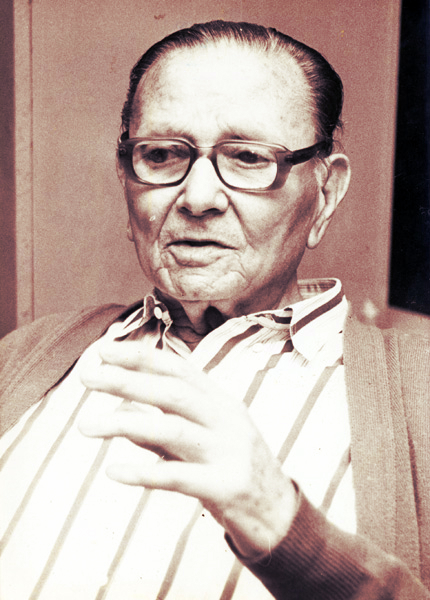
Born in Guía in 1906, and died in 1994 in Las Palmas de Gran Canaria at the age of 88, Néstor Álamo, who was self-taught, was above all a multifaceted intellectual who not only shone in the world of music, but also in other disciplines such as literature, architecture and historical research.
Among his musical works we can highlight some of the most famous folkloric works, perhaps the best known: Sombras del Nublo, Andrés repásate el motor, ¡Ay Teror qué lindo eres, La Noche de Arguineguín...
He is the author of books such as "Thenesoya Vidina y más tradiciones", "Crónicas de un siglo: 1800-1900" and "La Perejila", a work that was made into a play; he also collaborated with the press by writing numerous articles for "La Provincia" and "Diario de Las Palmas", or in magazines such as the Anuario de Estudios Atlánticos, where he published several works on the History of the Canary Islands.
At the Museo Canario he carried out an extraordinary task, cataloguing and ordering the library and archives, work which, for example, has made possible the subsequent research work of numerous historians.
In 1931, together with Juan García, he founded the weekly newspaper La Voz del Norte in his native Guía. Here he also collaborated in the restoration of the chapel of the parish church of Santa María de Guía. In 1945 he was appointed secretary to Matías Vega, president of the Cabildo Insular de Gran Canaria, a post he took advantage of to break into the world of architecture; he was involved with designs for the Casa de Colón and the Casa Museo Pérez Galdós in Las Palmas de Gran Canaria, the Casa Museo León y Castillo in Telde, and the Parque Teresa Bolívar in Teror.
In 1951 he was appointed curator of the Casa de Colón and three years later he was appointed Official Chronicler of the island of Gran Canaria.
He received many and varied awards and decorations, including the Order of the Commander of the Civil Merit and the Canary Islands Historical Heritage Award in 1989.