

Socio Economic development
The socio-economic evolution of Santa María de Guía mirrors the different economic cycles that occurred in the rest of the archipelago: first sugar cane, then wine and later cochineal, always interspersed with major economic crises and periods of emigration, despite which Guía always had an outstanding economy on the island and a well-off population, an aspect that was reflected in the architecture of the houses in the town.
At the end of the 19th century, and in the coastal area banana cultivation, was established and has been maintained up to the present day, although its surface area has been greatly reduced compared to what it was in the 1960s. The beginnings of this new monoculture led Guía to revive a new episode of socio-economic splendour.
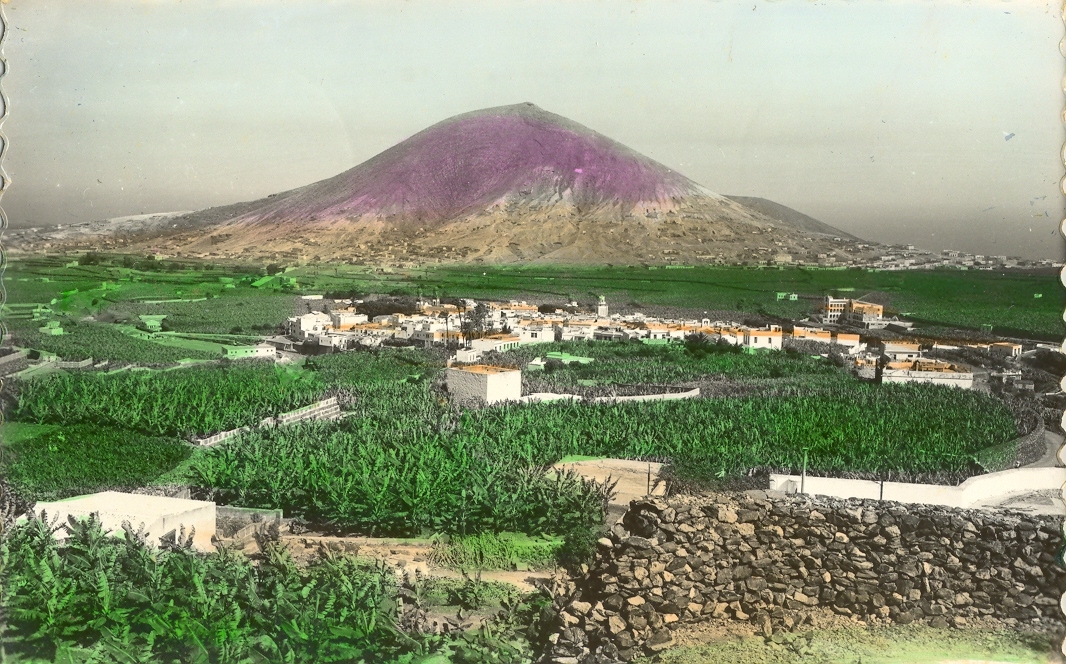


At present, and despite the scarcity of water and the high price that has to be paid for it, agricultural activities continue to play an important role in the municipality, especially irrigated crops such as bananas, potatoes and various vegetables, which, with the exception of the former, are mainly destined for the local market.
Lastly, livestock farming (mainly goats and sheep) has also played a part, albeit to a lesser and more residual extent, in the socio-economic development of Guía, an activity that has its roots in the aboriginal past. However, livestock farming has very special connotations in this municipality, as it is linked to the traditional production of cheese, which is widely recognised here, perhaps best exemplified by the so-called "queso de flor" (flower cheese).